
What is SMO?

SMO (Social Media Optimization) is the process of optimizing your social media profiles and content to increase visibility, engagement, and brand awareness on social media platforms.
In simple terms:
SMO helps businesses and individuals use social media more effectively to reach the right audience and grow their online presence.
Social media platforms where SMO is commonly used include:
Facebook
Instagram
LinkedIn
Twitter (X)
YouTube
Pinterest
By optimizing posts, profiles, and strategies, SMO helps attract more followers, likes, shares, and interactions.
Why is SMO Important?
Millions of people use social media every day. This makes it a great opportunity for businesses and creators to connect with their target audience.
Key Benefits of SMO
Improves brand visibility
Increases website traffic
Builds trust and credibility
Engages with customers directly
Helps content go viral
Supports overall digital marketing strategy
For businesses, SMO is an essential part of digital marketing and brand building.
How SMO Works
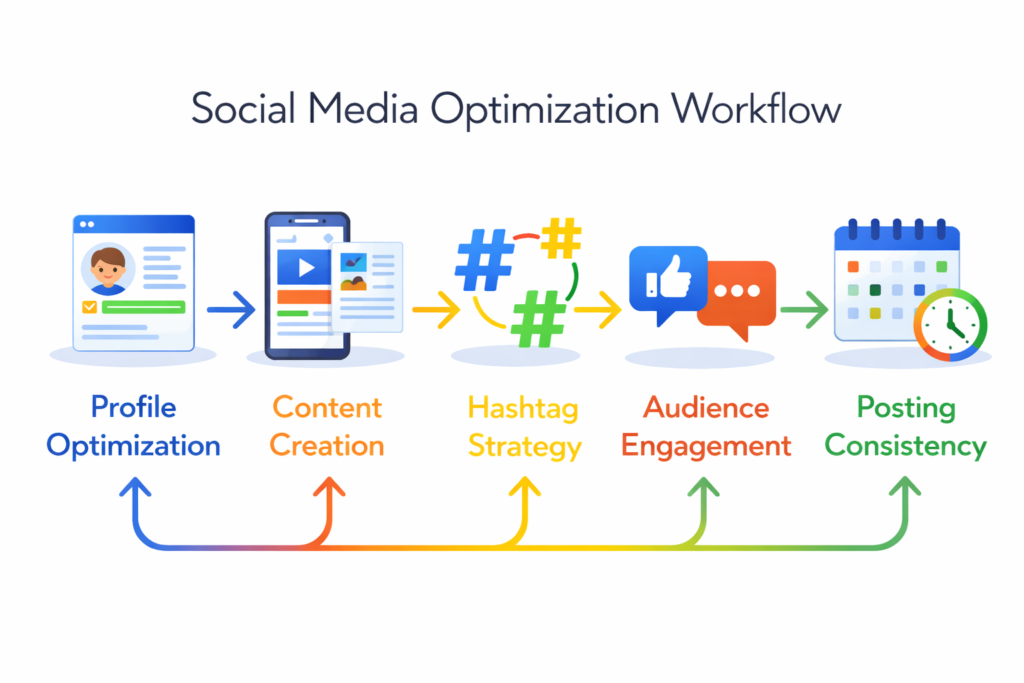
SMO works by improving the quality, consistency, and visibility of your social media content.
Here are the main elements involved in SMO:
1. Profile Optimization
Your social media profile is the first thing people see. A well-optimized profile builds trust and professionalism.
Important elements include:
Clear profile picture or brand logo
Professional bio or description
Relevant keywords
Website link
Contact information
A strong profile makes your brand look authentic and trustworthy.
2. Content Optimization
Content plays a major role in SMO. Your posts should be valuable, engaging, and relevant to your audience.
Examples of optimized content include:
Informative posts
Short videos or reels
Educational tips
Infographics
Trending content
Story updates
Consistent posting helps maintain visibility and engagement.
3. Hashtag Strategy
Hashtags help social media platforms understand the topic of your content.
For example:
#DigitalMarketing
#SocialMediaTips
#OnlineBusiness
#ContentMarketing
Using relevant hashtags increases the chances of your content being discovered by new audiences.
4. Audience Engagement
Engagement is one of the most important parts of SMO.
This includes interacting with your audience through:
Replying to comments
Responding to messages
Asking questions
Running polls
Encouraging shares
The more engagement your content receives, the more social media platforms promote it to other users. 5. Consistency in Posting
Posting regularly keeps your audience active and interested.
A consistent posting schedule might include:
3–4 posts per week
Daily stories
Weekly reels or videos
Consistency helps build strong relationships with followers.
Popular Social Media Platforms for SMO

Different platforms serve different marketing purposes.
Best for:
Community building
Business promotions
Advertising campaigns
Best for:
Visual content
Reels and short videos
Influencer marketing
Best for:
Professional networking
B2B marketing
Career-related content
YouTube
Best for:
Video marketing
Tutorials
Educational content
Twitter (X)
Best for:
Real-time updates
News
Short-form content
Choosing the right platform depends on your target audience and business goals.
SMO vs SEO
Many people confuse SMO with SEO, but both are different digital marketing strategies.
SMO (Social Media Optimization)
Focuses on social media platforms
Builds brand awareness
Increases engagement and followers
Drives traffic through social platforms
SEO (Search Engine Optimization)
Focuses on search engines like Google
Improves website ranking
Brings organic search traffic
Uses keywords and website optimization
Both strategies work best when used together.
Tips for Effective SMO Strategy
If you want to grow your social media presence, follow these simple but powerful tips.
1. Create High-Quality Content
Always post content that is useful, entertaining, or educational.
2. Use Attractive Visuals
Images, videos, and graphics attract more attention than plain text.
3. Post at the Right Time
Posting when your audience is active increases engagement.
4. Use Trending Topics
Trending topics help your content reach a larger audience.
5. Analyze Performance
Track important metrics like:
Likes
Shares
Comments
Reach
Engagement rate
This helps improve future content strategies