
In today’s digital world, simply creating a website is not enough. Millions of websites exist on the internet, and if your website does not appear in search results, people may never find it. This is where SEO (Search Engine Optimization) becomes important.
SEO is one of the most powerful digital marketing strategies that helps websites get discovered on search engines like Google. In this blog, you will learn what SEO is, how it works, why it matters, and the key components of SEO in a simple and easy-to-understand way.
What is SEO?

SEO (Search Engine Optimization) is the process of improving a website so that it ranks higher on search engine results pages (SERPs) when people search for related keywords.
In simple terms, SEO helps your website appear on Google when someone searches for something related to your business, product, or content.
For example:
If someone searches “best digital marketing course”
Or “how to start freelancing”
SEO helps the most relevant and optimized websites appear at the top of the results.
The main goal of SEO is to:
Increase organic (free) traffic
Improve website visibility
Attract the right audience
Grow online presence
Why is SEO Important?
SEO is essential for businesses, bloggers, freelancers, and creators who want to grow online.
Here are some key reasons why SEO matters:
1. Increases Website Traffic
SEO helps your website rank higher in search results. The higher your website ranks, the more people will click on it.
2. Builds Trust and Credibility
Websites that appear on the first page of Google are often seen as more trustworthy and credible.
3. Cost-Effective Marketing
Unlike paid ads, SEO brings organic traffic, which means you don’t need to pay for every visitor.
4. Improves User Experience
SEO also focuses on improving website speed, structure, and usability, which makes your website better for visitors.
5. Long-Term Results
Once your website ranks well, it can continue to bring traffic for months or even years

How Do Search Engines Work?
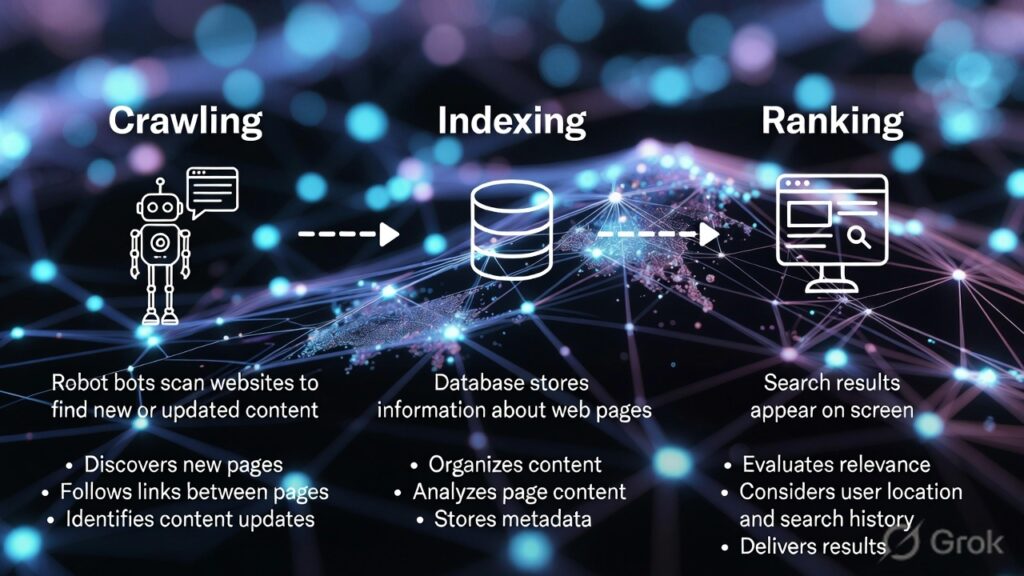
Search engines like Google follow three main steps to rank websites:
1. Crawling
Search engines use bots (also called spiders) to scan websites and discover new pages.
2. Indexing
After crawling, the pages are stored in a huge database called the index.
3. Ranking
When someone searches for something, Google shows the most relevant and optimized pages from its index.
SEO helps your website perform better in these steps so that it appears higher in search results.
Types of SEO
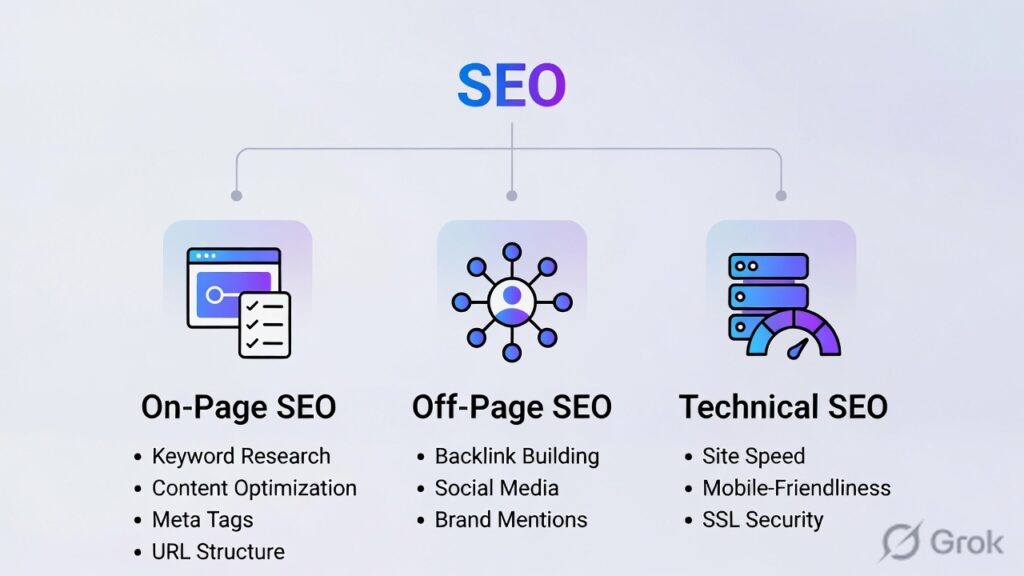
SEO is generally divided into three major categories.
1. On-Page SEO
On-page SEO focuses on optimizing elements inside your website.
Key on-page SEO factors include:
Keyword optimization
High-quality content
Proper headings (H1, H2, H3)
Meta titles and descriptions
Image optimization
Internal linking
Mobile-friendly design
These elements help search engines understand what your content is about.
2. Off-Page SEO
Off-page SEO refers to actions taken outside your website to improve its authority and reputation.
Examples include:
Backlink building
Social media sharing
Guest blogging
Influencer outreach
Brand mentions
Backlinks from trusted websites act like votes of trust for your site.
3. Technical SEO
Technical SEO focuses on improving the technical performance of a website.
Important technical SEO factors include:
Website speed
Mobile optimization
Secure website (HTTPS)
XML sitemap
Structured data
Fixing broken links
Technical SEO ensures that search engines can easily crawl and index your websit
Key Elements of a Successful SEO Strategy

To succeed in SEO, you need a proper strategy. Some important elements include:
Keyword Research – Finding the words people search for
Quality Content – Creating helpful and valuable content
Backlinks – Getting links from authoritative websites
User Experience – Making your website easy to use
Consistency – Regularly updating content and improving pages
SEO is not a one-time activity; it requires continuous improvement and monitoring.